
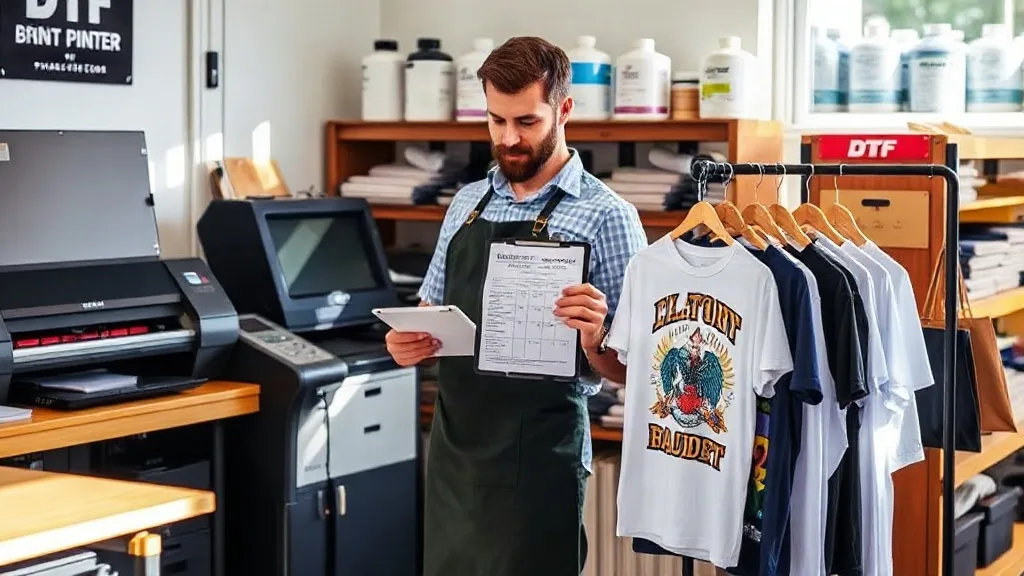
Pricing custom apparel is one of the trickiest parts of running a print shop. Charge too little, and you barely cover costs. Charge too much, and customers walk away. With dtf transfers, the cost structure is different from screen printing or vinyl, and many shop owners struggle to find the sweet spot. This guide breaks down the real costs, offers a simple pricing framework, and shows you how to communicate value so customers happily pay what your work is worth.
Why DTF Pricing Feels Complicated
DTF printing involves several consumables: film, powder, ink, and the transfer itself. Unlike screen printing, where you pay for screens and setup, DTF has a more linear cost per print. But that doesn't mean pricing is straightforward. You also need to factor in labor, equipment depreciation, waste, and overhead. Many shops make the mistake of pricing only on material cost, then wonder why profits are thin. The key is to build a pricing model that captures every expense and still leaves room for profit.
Breaking Down Your Costs
Before you set a price, know your numbers. Here are the main cost components for dtf printing:
- Materials: Film, powder, and ink. Calculate cost per square inch or per transfer. A typical A4 sheet might cost $0.50 to $1.00 in consumables, depending on quality and supplier.
- Labor: Time spent designing, printing, powdering, curing, and pressing. Even if you do it yourself, your time has value. Estimate an hourly rate and divide by output per hour.
- Equipment: Printer, shaker, heat press, and software. Depreciation and maintenance should be spread across jobs. A $10,000 printer expected to last 3 years and produce 10,000 prints adds $0.33 per print.
- Waste: Misprints, test prints, and errors. Industry average waste is 5-10%. Add that percentage to your material cost.
- Overhead: Rent, utilities, insurance, marketing. Allocate a portion to each job based on volume or square footage.
Add these up to get your true cost per transfer. For example, a 10x10 inch design might cost $1.50 in materials, $0.50 in labor, $0.33 in equipment, $0.15 in waste, and $0.50 in overhead, totaling $2.98. That's your break-even point.
Setting Your Markup
Once you know your cost, you can apply a markup. A common formula is cost plus 50-100% for wholesale and 100-200% for retail. But don't just pick a number. Consider your market, competition, and the value you provide. If you offer fast turnaround, high-quality prints, and excellent service, you can command a higher price. For custom apparel with dtf transfers, retail customers often expect to pay $15-$30 for a printed t-shirt, so your transfer price should fit within that retail price while leaving room for the garment and your profit.
Wholesale vs. Retail Pricing
Wholesale customers (e.g., other shops or brands) buy in bulk and expect lower prices. Retail customers (e.g., individuals or small teams) pay per piece. For wholesale, aim for a 30-50% margin. For retail, 50-70% margin is typical. But always ensure your wholesale price covers costs and contributes to overhead. Don't fall into the trap of pricing wholesale too low just to win accounts; you'll end up working harder for less.
Pricing by Transfer Size
Not all transfers are created equal. A small left-chest logo uses less material than a full-back print. Price by size tiers to reflect material usage. For example:
- Small (up to 5x5 inches): $3.50 retail, $2.00 wholesale
- Medium (up to 8x10 inches): $5.00 retail, $3.00 wholesale
- Large (up to 12x12 inches): $7.00 retail, $4.50 wholesale
- Extra-large (over 12x12 inches): $9.00+ retail, $6.00+ wholesale
Adjust these based on your actual costs. The key is to have a clear structure that customers can understand and that ensures you're not losing money on larger prints.
Communicating Value to Customers
Price is only one part of the equation. Customers need to understand why your dtf transfers are worth the price. Highlight the durability, vibrant colors, and soft feel that DTF provides. Show samples. Explain that cheaper transfers may crack or fade after a few washes. When customers see the quality difference, they're more willing to pay a premium. Also, offer bundles or volume discounts to encourage larger orders. For example, "Buy 10 transfers, get 1 free" or "10% off orders over $100." This increases average order value and improves your margins.
Common Pricing Mistakes to Avoid
Even experienced shop owners slip up. Watch out for these pitfalls:
- Pricing based on competitors: Your costs may be different. Competing on price alone leads to a race to the bottom.
- Ignoring labor: Your time is money. If you don't account for it, you're essentially working for free.
- Forgetting waste: Misprints happen. Build waste into your price.
- Not adjusting for inflation: Material costs fluctuate. Review your prices regularly.
- Undercharging for rush orders: Rush jobs disrupt your workflow. Charge a premium (e.g., 20-30% extra) for expedited service.
Using DTF Transfers Near Me to Your Advantage
If you're a local print shop, you have a unique advantage: proximity. Customers searching for dtf transfers near me are often looking for quick turnaround and personal service. You can charge a premium for same-day or next-day service because you're saving them shipping time and hassle. Promote your local presence and convenience. Offer pickup options and build relationships with local businesses, schools, and sports teams. They value supporting local and often prefer to work with someone they can meet in person.
Frequently Asked Questions
How do I calculate the cost per DTF transfer?
Add up material costs (film, powder, ink), labor (time multiplied by hourly rate), equipment depreciation, waste (5-10% of materials), and overhead allocation. Divide by the number of transfers in a run to get cost per transfer.
What is a fair markup for DTF transfers?
For retail, aim for 100-200% markup over cost. For wholesale, 50-100%. But always ensure your price covers all costs and contributes to profit. Consider your market and value proposition.
Should I charge differently for small vs. large transfers?
Yes, because material usage varies. Use size tiers to reflect the amount of film, ink, and powder used. This ensures you're not losing money on larger prints.
How can I compete with online DTF transfer suppliers?
Focus on speed, quality, and service. Offer local pickup, same-day turnaround, and personalized support. Many customers are willing to pay more for convenience and reliability.
How often should I review my DTF transfer prices?
Review at least quarterly, or whenever material costs change significantly. Keep an eye on your profit margins and adjust as needed to maintain profitability.